
Before you can build the right solution, you need to know exactly who you’re building it for. Customer segmentation helps you identify and focus on the customers who will get the most value from what you’re creating.
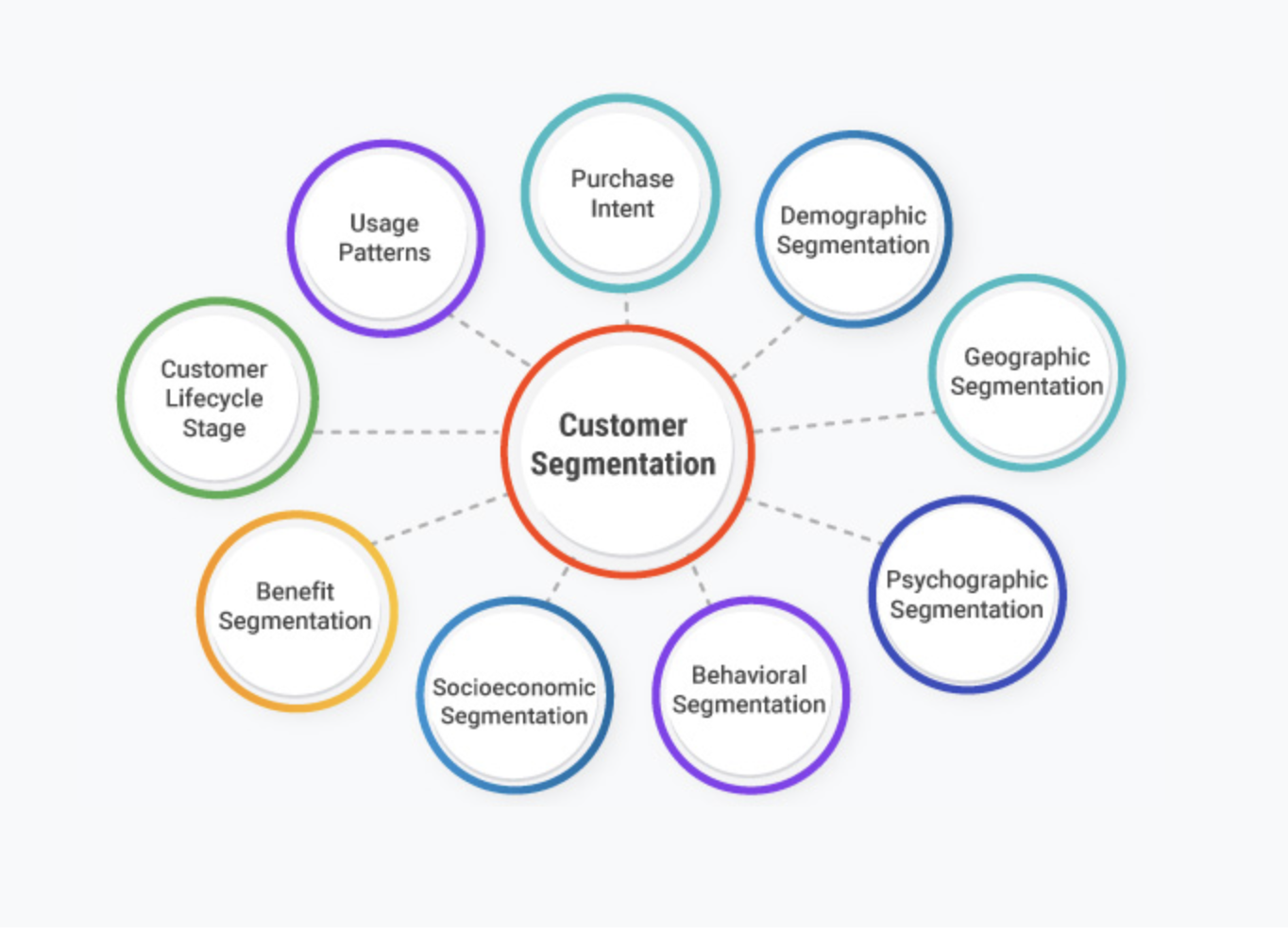
What Is Customer Segmentation?
Customer segmentation means dividing a market into groups of people who share similar needs and behaviors. Instead of trying to serve everyone, you pick specific groups where you can make a real difference.
Here’s why this matters: two people might both have “the same problem” on paper, but solve it differently, value different things, and buy in completely different ways. Understanding these differences helps you focus where you can actually win.
For example, consider electric scooters. “Urban commuters” is too broad - it includes everyone from students to executives with completely different needs. But “professionals traveling 2-5 km to work in cities with limited parking” is specific enough to design for. You now know their commute distance, their employment status, their parking challenge, and can build exactly what they need.
Why Segmentation Matters
Without knowing exactly who you’re solving for, you dilute your offering trying to fit everyone. You can’t tell if your solution actually works better than alternatives. You waste time on features that don’t matter to anyone. Most importantly, you miss the chance to truly excel for someone specific. Focused solutions beat generic ones every time.
Understanding B2C vs B2B Segmentation
When you shift from selling to individuals (B2C) to selling to businesses (B2B), the segmentation approach changes fundamentally. An individual decides based on personal needs and acts quickly. A business involves multiple stakeholders, longer decision cycles, and evaluates based on business value rather than personal preference.
In B2C, you might segment on lifestyle, personal values, or individual pain points. Someone buys running shoes because they want to get fit, express their style, or join a running community. In B2B, you segment on business characteristics, organizational challenges, and decision-making structures. A company buys project management software because it needs to coordinate teams, report to stakeholders, and scale operations efficiently.
This means your segmentation criteria shift. For B2C, you look at age, lifestyle, personal goals, and individual behaviors. For B2B, you examine company size, industry, organizational maturity, budget cycles, and who makes purchasing decisions. Both need all three segmentation lenses - demographics, behavior, and psychographics - but what you look for in each changes completely.
Three Ways to Understand Customers
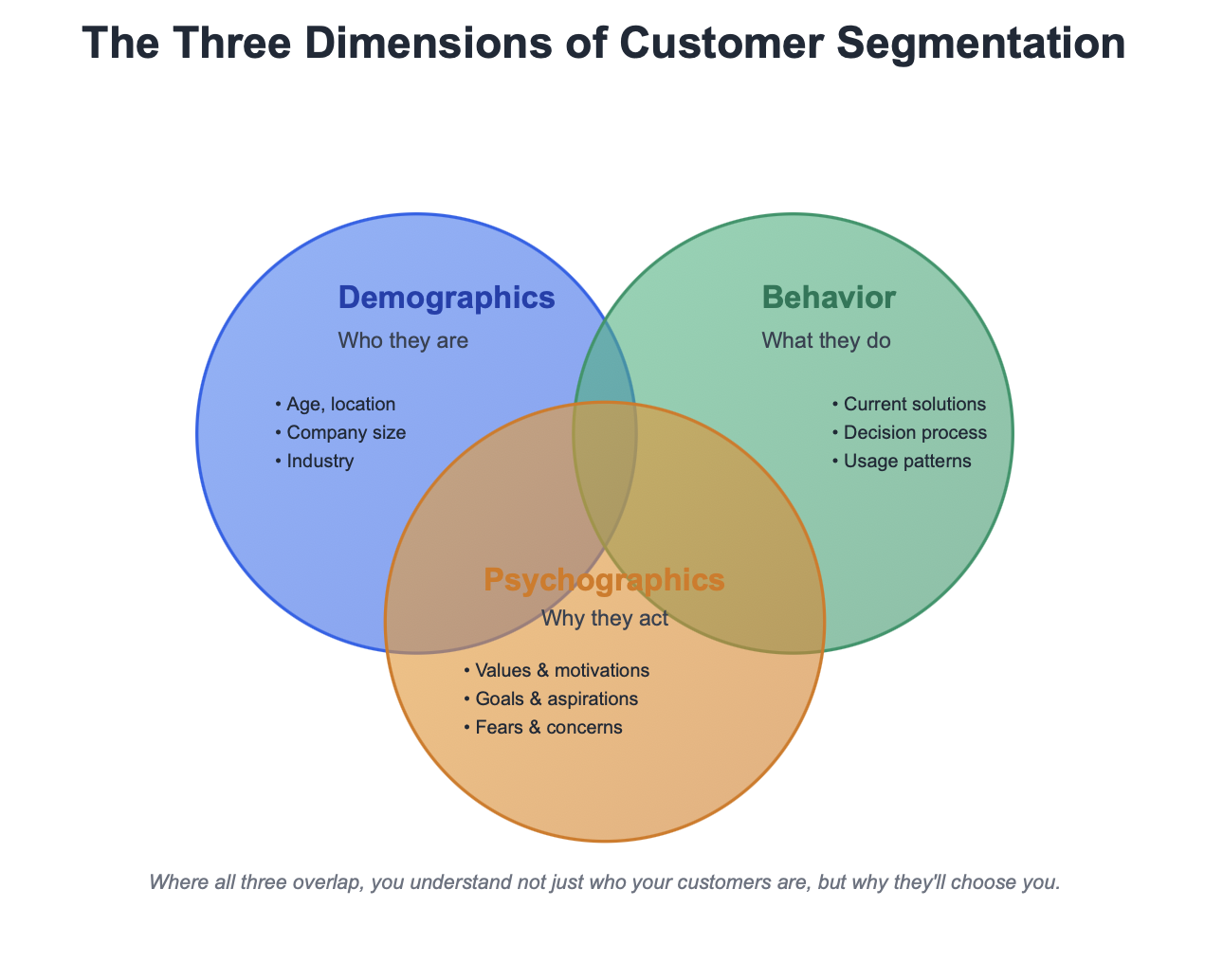
Every good segment combines three types of information that together create a complete picture of who you’re serving. Demographics are the observable facts - age, location, company size, industry - that help you identify and find potential customers. Behavior shows what they actually do - how they handle the problem today, what solutions they’ve tried, and what triggers them to seek something better. Psychographics reveals why they act the way they do - their values, goals, fears, and what motivates them to embrace change versus stick with the status quo.
How to Segment: The Process
Start with conversations, not assumptions. Desk research gives you context about the market, but real insights come from talking to people who have the problem you’re solving. Talk to five to ten people and explore how they handle the problem today, what frustrates them about current solutions, what they’ve tried that didn’t work, what would make them try something new, and how they decide to adopt new solutions.
Take notes in their exact words. When someone says “I’ve tried three different apps and they all assume I work 9-5,” that tells you more than your summary “existing solutions aren’t flexible.” Their language reveals what actually matters to them.
After your conversations, look for patterns. Find people who describe similar frustrations, have tried similar solutions, make decisions in similar ways, and value similar outcomes. These clusters become your potential segments. You’re not looking for people who are demographically identical - you’re looking for people who experience the problem in similar ways.
Now define three to five segments. Each segment should capture who they are with key characteristics that identify them, the problem they experience with specific pain points and why current solutions fail them, how they behave including what they do today and how they find new solutions, and what drives them including what they’re trying to achieve and what makes them try new things.
Finally, choose where to start. Rate each segment on problem intensity (how much does this problem affect them?), willingness to change (are they actively looking for new approaches?), reachability (can you find more people like this?), and strategic value (will success here open doors to other segments?). Pick the segment with the highest combined score.
Examples of Good Segmentation
B2C Example: Meal Planning App
Too broad: “Busy people who cook at home”
Better segment: “Working parents with kids under 12 who struggle to plan healthy weekday meals, currently rely on repetitive recipes or last-minute takeout, value family health but lack time for meal planning, and actively look for solutions that save time without sacrificing nutrition.”
This segment works because you can identify them (working parents with young kids), you know their specific problem (weekday meal planning stress), you understand their behavior (repetition or takeout as fallbacks), and you know what drives them (health values conflicting with time constraints).
B2B Example: Project Management Tool
Too broad: “Companies that need better collaboration”
Better segment: “Design agencies with 10-30 employees managing 5-15 client projects simultaneously, currently use email and spreadsheets causing version control issues and missed deadlines, value client satisfaction and creative output over administrative efficiency, and make buying decisions through creative directors who prioritize team adoption over feature lists.”
This segment works because you know the company type and size, the specific operational problem, current inadequate solutions, what they value, and who decides on new tools.
Define Your First Segment
Now it’s time to apply this to your own idea. This quick exercise helps you move from understanding segmentation in theory to creating your first real segment.
Step 1: Write down 3-5 potential customer groups (broad version is fine for now) Example: “Small businesses”, “Busy parents”, “Students”
Step 2: Pick the one that feels most promising and describe them using all three dimensions:
Demographics - Who are they? (Age, location, company size, role, industry, income level, etc.)
Behavior - What do they do today? (Current solutions, pain points, decision process, triggers to change)
Psychographics - Why do they act this way? (Values, goals, motivations, fears, what makes them try new things)
Step 3: Compare your “before” and “after”
- Before: “Small businesses”
- After: “Independent consultants with 1-3 employees managing 5-10 client projects simultaneously, currently using spreadsheets and email causing missed deadlines, value client relationships over administrative tools, and make quick buying decisions when they see immediate time savings”
Notice how much more specific and actionable the “after” version is? That’s what good segmentation does.
Quick check: Can you find 10 more people like this? Can you describe their exact problem? Do you know where to reach them? If yes to all three, you’re ready to move forward.
Common Traps to Avoid
Starting too broad is the most common mistake. “Small businesses” isn’t a segment because a three-person consultancy and a forty-person manufacturing company have almost nothing in common. “Independent consultants struggling to manage client projects” is specific enough to design for.
Another trap is defining segments by your solution rather than their problem. “People who need AI tools” focuses on what you built, not what they need. Instead, focus on the problem: “Marketers overwhelmed by content creation who currently spend 10+ hours weekly on repetitive writing tasks.”
Some founders ignore who’s actually ready for change. Not everyone with a problem wants a new solution. Some people actively look for better approaches while others resist change even when current solutions fail. Start with people ready to try something new, then expand to others later.
Finally, avoid analysis paralysis. You need enough information to make a good choice, not perfect information. Talk to five to ten people, find patterns, pick a segment, and test it. You can always refine later based on what you learn.
Testing Your Segment
Before moving forward, check whether you can describe exactly who they are, understand their specific problem, find ten more people like this, confirm they’re open to trying better solutions, and reach them through specific channels. If you can’t answer yes to all of these, refine your segment until you can. A segment that passes all these tests is ready to work with.
What’s Next
With a clear segment chosen, you’re ready to design a value proposition that resonates specifically with them. Your solution doesn’t need to work for everyone - it needs to work brilliantly for someone. Move to the Value Proposition Canvas to map how you create value for this specific segment.
The time you spend understanding your segment now determines whether you find the right customers or get lost trying to serve everyone. Take the time to get this right.