
A Powerful Tool to Structure and Communicate Your Idea
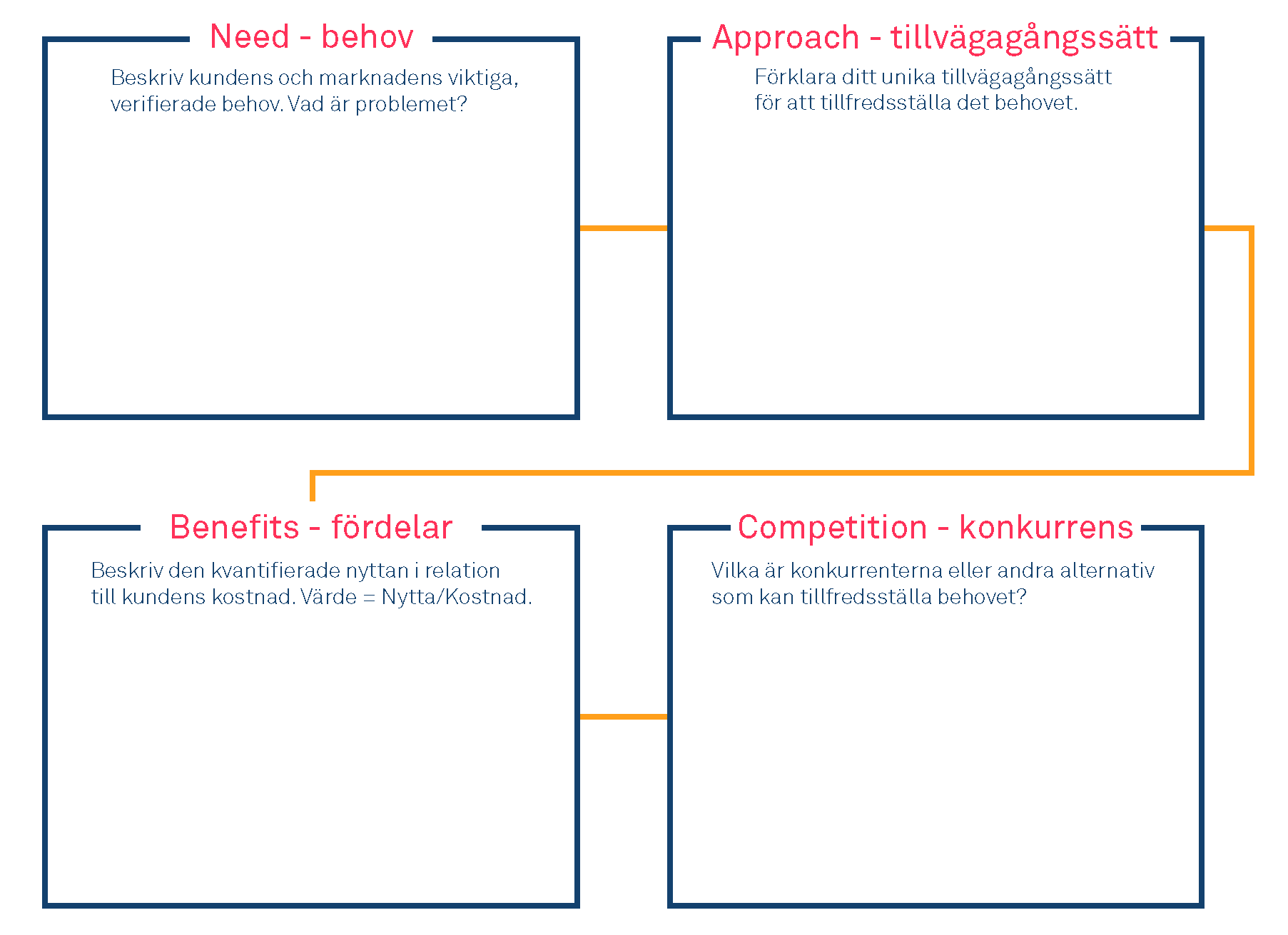
The NABC model (Need, Approach, Benefits, Competition) is a simple yet powerful framework developed at Stanford Research Institute (SRI International) to structure and communicate innovative ideas. The model helps you focus on the most important aspects of your business idea and present it in a compelling way!
When to Use the NABC Model?
- When you need to structure a new business idea or solution
- When preparing a pitch for investors, partners, or customers
- When evaluating different ideas or solution alternatives
- When you need to communicate your idea clearly and concisely
- When you want to identify weaknesses in your business idea
Benefits of the NABC Model
- Simplicity: Four clear components that are easy to understand and apply
- Customer-centricity: Starts with customer needs, not your solution
- Holistic perspective: Covers both problem, solution, value, and competition
- Communication: Creates a clear and compelling narrative
- Evaluation: Helps you identify strengths and weaknesses in your idea
The Four Components of the NABC Model
N - Need
Core question: What specific customer need or problem does your idea address?
Focus on:
- Concrete description of the problem or need
- The scope and significance of the problem for the customer
- Quantification of the problem (time, money, frustration)
- Evidence that the problem exists and is important
Example: “Small business owners lose an average of 5 hours per week on manual invoice management, costing them approximately 10,000 SEK per month in lost productivity and delayed payments.”
A - Approach
Core question: How does your idea solve the identified need?
Focus on:
- Clear description of your solution
- What makes your solution unique or innovative
- How the solution works on a conceptual level
- Technical or methodological advantages
Example: “Our cloud-based invoicing platform automates the entire invoicing process from creation to payment reminders, with smart integration to accounting and banking services.”
B - Benefits
Core question: What value does your solution create for the customer?
Focus on:
- Concrete and quantifiable benefits
- Direct and indirect values
- Economic, emotional, and functional benefits
- How the benefits relate to the identified need
Example: “Our solution saves small business owners an average of 4 hours per week, reduces delayed payments by 60%, and decreases invoice errors by 90%. This results in improved cash flow and reduced stress.”
C - Competition
Core question: Why is your solution better than the alternatives?
Focus on:
- Existing solutions and competitors
- How customers solve the problem today
- Your competitive advantages
- Why customers would choose your solution
Example: “Unlike existing invoicing systems that require manual input, our solution uses AI to automatically extract data from receipts and orders. Compared to the main competitor Invoice Pro, we offer 30% lower prices and a mobile app that allows users to manage invoices anywhere.”
How to Use the NABC Model
Step 1: Identify and Define the Need
- Conduct customer interviews to understand real problems
- Quantify the need when possible (time, money, frustration)
- Validate that the need is large enough to justify a solution
Step 2: Develop Your Approach
- Describe your solution clearly and concisely
- Focus on what makes your solution unique
- Ensure the solution directly addresses the identified need
Step 3: Articulate the Benefits
- Translate features into concrete customer benefits
- Quantify the benefits when possible
- Link the benefits directly to the customer’s need
Step 4: Analyze the Competition
- Map existing solutions and competitors
- Identify your differentiated advantages
- Understand why customers would choose your solution
Step 5: Iterate and Refine
- Gather feedback on your NABC analysis
- Identify weaknesses and areas for improvement
- Refine each component based on new insights
Common Mistakes to Avoid
- Starting with the solution instead of the need Focus first on clearly defining the problem before presenting your solution.
- Exaggerating benefits without evidence Be specific and realistic with the benefits you promise, and back them up with data when possible.
- Underestimating competition Be honest about competitors and alternative solutions, including “doing nothing” or manual methods.
- Too technical focus Avoid technical jargon and instead focus on the value for the customer.
- Unbalanced presentation Give roughly equal space to each component in the model.
NABC Template
Need
- What specific problem or need are we addressing?
- Who has this problem?
- How big is the problem (quantify)?
- What evidence do we have that the problem exists?
Approach
- What does our solution look like?
- What makes it unique or innovative?
- How does it work on a conceptual level?
- What are the main features?
Benefits
- What specific benefits does the customer get?
- How can we quantify these benefits?
- What economic, emotional, and functional values are created?
- How do the benefits relate to the identified need?
Competition
- What alternative solutions are available?
- How do customers solve the problem today?
- What are our competitive advantages?
- Why would customers choose our solution over alternatives?
Next Steps
After structuring your idea with the NABC model, consider these tools for further development:
- Value Proposition Canvas - To deepen the understanding of customer value
- Business Model Canvas - To develop a holistic business model
- Elevator Pitch Structure - To refine your short presentation
[Button: Download NABC Template] [Button: Book Workshop on the NABC Model] [Button: See Examples of NABC Analyses]
Resources for Further Study
Articles and Guides
Videos
https://www.youtube.com/watch?v=iHiLAJGDGt4
Was this tool helpful?